Back to Homepage

9910

How can you cut energy consumption in half with an efficient painting line?

and

March 10, 2026    4 min.

To improve operational efficiency and product quality, a manufacture made a significant investment in her its powder coating line, using innovative technologies to reduce energy consumption and greenhouse gas (GHG) emissions. What are these technologies and why are they so effective? What economic and environmental gains did they produce? What other technologies can improve such a facility’s energy performance? Learn all about it in this article.

Reducing energy requirements while boosting efficiency

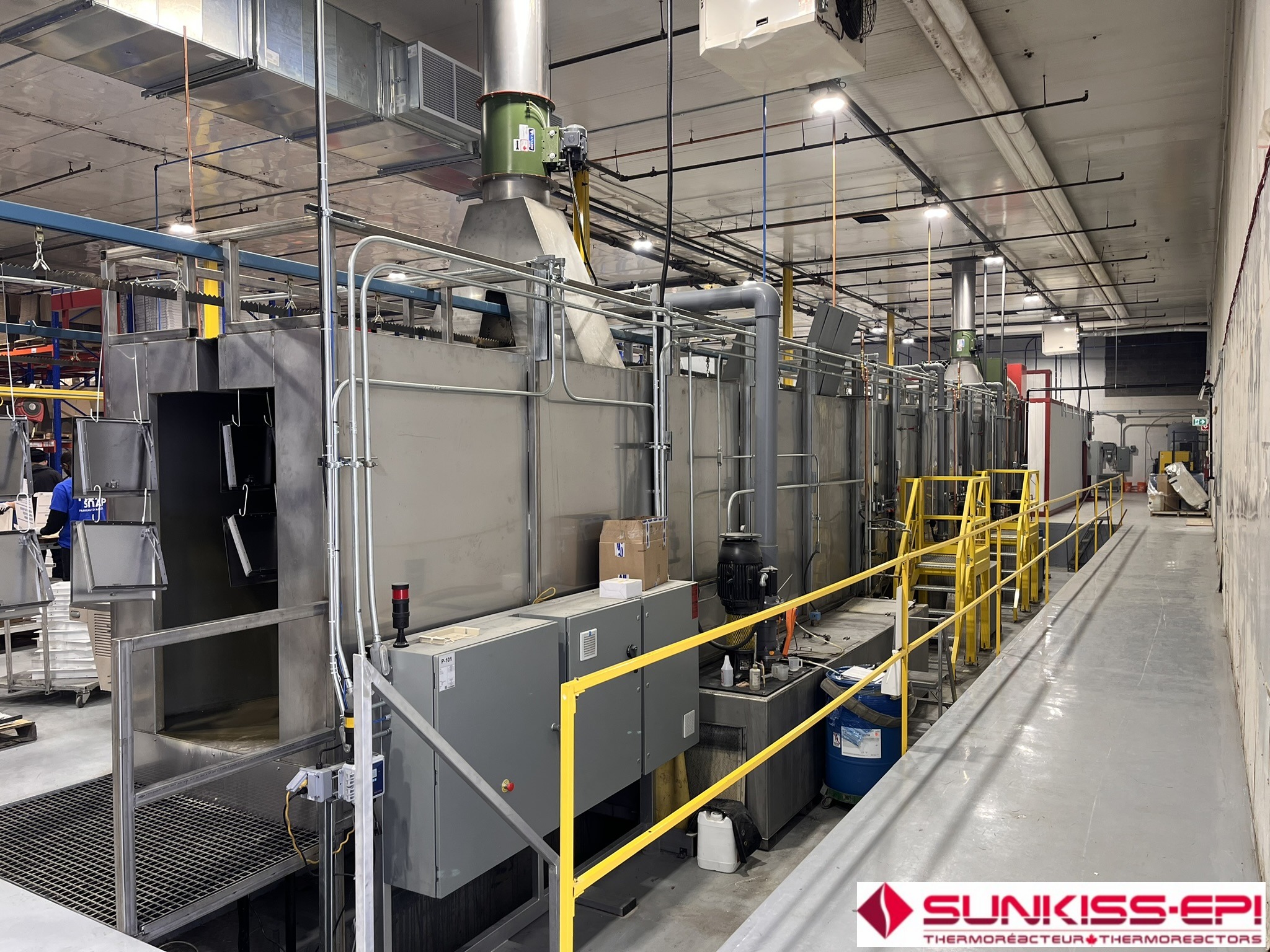
The automated paint line under study is used to prepare, paint and cure the produced parts. As the primary energy consumers, the ovens at the end of the line offer the greatest potential for savings. Exhaust is also required during paint application to maintain a clean environment and to replace stale air with a fresh air supply.

Our customer implemented three efficient technologies on the production line to limit natural gas consumption and boost efficiency:

Variable-frequency drives (VFD) on exhaust fans

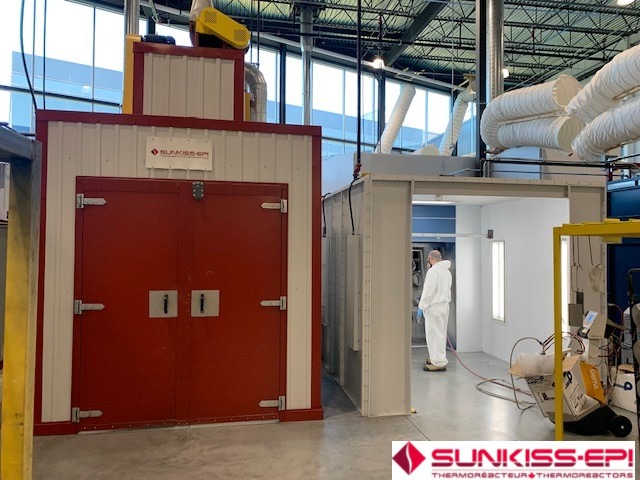
Infrared thermoreactors for rapid curing

Air curtains at oven openings

1. Variable-frequency drives (VFD) on exhaust fans

VFDs adjust fan motor speed to precisely regulate airflow based on the paint line’s actual needs. During the initial purge**, fans run at full capacity; then VFDs reduce their speed to limit the exhaust of hot air. As a result, the volume of new, cold air to be heated is smaller, reducing the thermal load on the burners. With this technology, we estimate savings of 31,000 m3 of natural gas per year.*

2. Infrared thermoreactors for rapid curing

The infrared thermoreactors chosen by the customer use natural gas radiant panels. The panels’ wavelength is optimized such that only the powder absorbs the energy, thereby eliminating the need to heat the entire metal mass of the part. As a result, the temperature ramp-up time was reduced from ten (10) minutes to two (2), allowing for shorter ovens and lower heating power. This technology saves an estimated 39,000 m3 of natural gas per year,* while also improving paint quality and increasing production speed.

3. Air curtains at oven openings

Air curtains, a technology we discuss in detail in this article, create a thermal barrier at openings using high-speed airflow, which limits heat exchange between the oven interior and the outside environment. By reducing heat loss from infiltration, these curtains save an estimated 24,000 m3 of natural gas per year.*

Demonstrated results

By leveraging these technologies, the customer was able to achieve its financial and environmental goals while shortening its payback period.   Thanks to financial support from the Government of Québec’s ÉcoPerformance program and a grant from the Studies and Implementation Component of Énergir’s energy efficiency program.


GHG emissions reduction: 176 tonnes of CO2/year***
Energy savings: 93,600 m3 of natural gas/year
Financial savings: $50,000/year
Payback period: 2.5 years with financial assistance from the ÉcoPerformance program and Énergir

Heat recovery: Taking optimization to the next level

Where applicable, it is possible to further optimize a paint line like the customer’s (or similar facilities) by recovering heat from curing ovens using technologies such as:

An air-to-air heat exchanger on exhaust gases:

This heat exchanger is installed on the exhaust duct to use combustion products to preheat fresh air.

  • Advantage: Reduces burner load
  • Limitation: Gases contain particulates and volatile organic compounds (VOCs) that require resistant materials and frequent maintenance
  • Energy efficiency: 40–65%

A run-around coil:

This system uses a heat transfer fluid to exchange heat between exhaust air and fresh air through separate coils.

  • Advantage: Prevents direct contamination due to separate flows
  • Limitation: Efficiency is lower than that of a direct heat exchanger
  • Energy efficiency: 45–50%

Heat recovery for preheated parts or treatment baths:

This system captures heat from exhaust gases to preheat parts before painting or to heat treatment baths.

  • Advantage: Directly recovers heat
  • Limitation: Requires process-specific integration
  • Energy efficiency: 20–50%

Énergir: By your side to optimize your decarbonization projects [and save you money]

For this project, Énergir leveraged the expertise of its representative and the DATECH team to advise the customer on the most relevant energy efficiency solutions to meet its goals and to help maximize the grant that the customer was eligible for based on its natural gas reduction. In total, the customer received a grant of $93,600, or $1 per m3 of natural gas saved.

Always attentive to your needs

Want to learn more about the technologies presented in this article? Want to implement energy efficiency measures to reduce your facility’s natural gas consumption and save money? Contact your Énergir representative or fill out this form to tell us about your project.

Cimon Desforges, P. eng.
Senior Advisor, Energy Expertise

Guillaume Barrette, CPE.
Assistant Advisor, Energy Expertise

DATECH Group

* Compared to a standard paint line without energy efficiency measures.
** The initial purge is a universal safety requirement for industrial boilers. It specifically prevents the presence of unburned gas when the oven is ignited.
*** For more information on how greenhouse gas (GHG) emission reductions are calculated, please visit our methodology page.

Continue reading