
Harvesting Efficiency : Energy Optimization in Quebec’s Greenhouse Sector



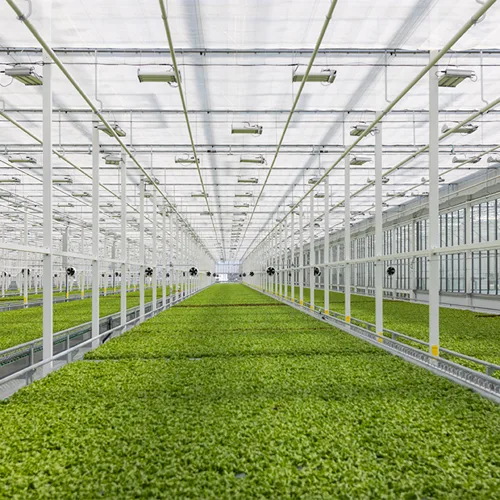
In Quebec, greenhouse heating can account for up to 30% of horticultural and market gardeners’ operating costs. Energy efficiency is a concrete way for these facilities to reduce their energy bills and GHG emissions. In this article, we provide an overview of the main measures applicable to this sector, supported by a real-life case study, as well as an overview of the grants offered by Énergir to help you implement these measures effectively.
Thermal screens: A barrier against heat loss
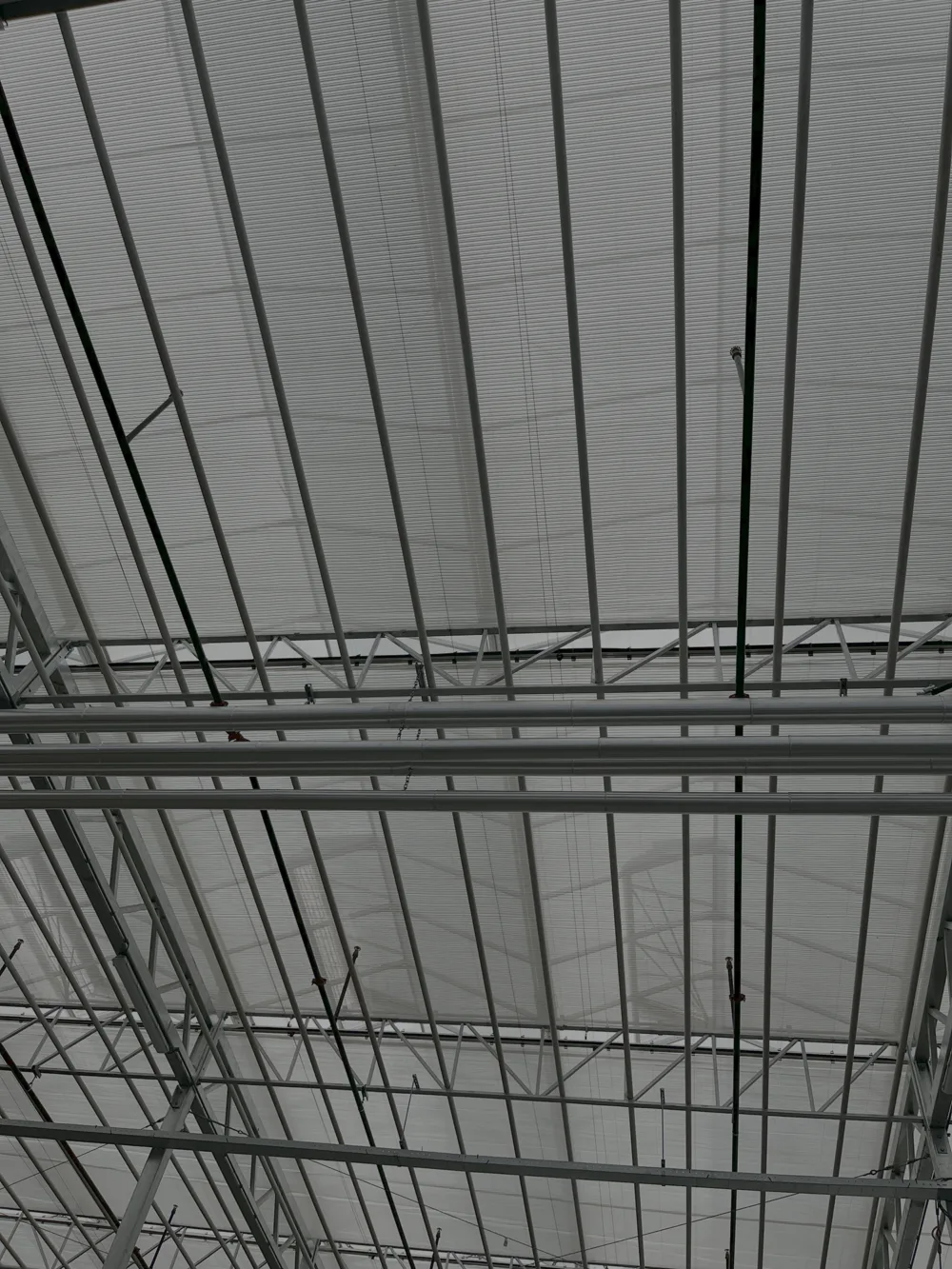
The first measure is also undoubtedly the best known: thermal screens are used to reduce the volume of air to be heated and radiation losses.1 They also help limit light pollution and create shade, depending on the specific needs of the crops.
These screens, which are fixed under the greenhouse gables and deployed at night, are used mainly to intercept infrared radiation from the plants and thermosiphon system2 to the night sky during heating periods, but also to reduce heat loss through convection.
Testing by Wageningen UR Greenhouse Horticulture and Delphy in the United States shows that thermal screens can reduce energy consumption by 15.5% annually;3 however, empirical evidence shows that this reduction could be as high as 35% in Quebec due to its harsher climate.
How an insulating wall can reduce heat loss
For new greenhouses, building a concrete insulating wall approximately one metre high around the perimeter of the greenhouse reduces natural gas consumption while improving the greenhouse climate, particularly in winter. This eliminates the risk of snow buildup around the glass walls and reduces the risk of breakage at the bottom of the walls. In addition, it makes it easier to install greenhouse walls by optimizing the working height and providing a solid foundation for the glass walls.
Automated climate management: Data intelligence for productivity
Automated climate management systems use a computer connected to a network of sensors and probes to adjust humidity, ventilation, air flow and irrigation levels in real time based on the needs in different areas of the greenhouse. They also provide accurate and practical data for production-related decisions. By automatically managing energy, the system also eliminates the risk of oversights or errors that could lead to energy or production losses. It is estimated that this type of system can increase crop yields by 20% to more than 30%.4,5
Automation to increase greenhouse production density
Automating cultivation using commercially available technologies makes it possible to significantly increase greenhouse production density while reducing human intervention. For example, the amount of lettuce produced on one acre with this type of system is equivalent to that produced on over 50 acres of open field farming and is several times higher than the yield of a traditional greenhouse system.6 In addition, an automated system can compensate for labour shortages and optimize space and energy use.
Heat recovery + CO2 injection: Nothing is lost, everything is transformed
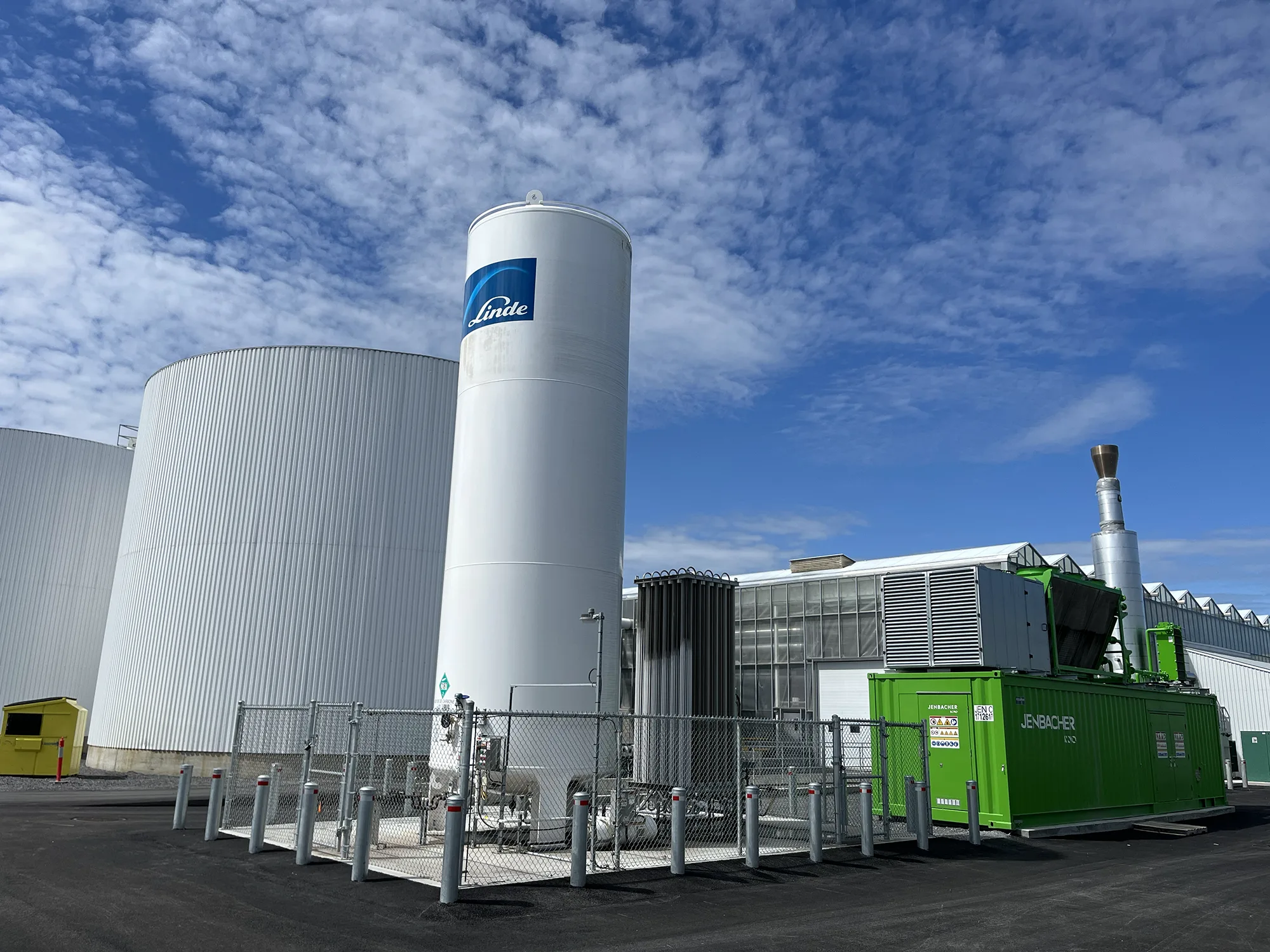
Heat recovery from boiler stacks using thermal storage and CO2 injection presents multiple advantages. For a greenhouse heated with hot water, capturing heat from boiler flue gases using a heating water return exchanger makes it possible to recover thermal energy by condensing the moisture contained in the combustion products. This system not only increases the thermal efficiency of gas boilers by 10%, but also recovers CO2 (the other combustion product) to stimulate plant growth. For hot water systems, in the middle of the season, a buffer water reserve is used to heat the greenhouse at a lower cost at night, while during the day, CO2 is injected at the plant roots to promote growth and vigour.
For example, in most greenhouse crops, the photosynthetic yield increases by 50% when the CO2 concentration rises from 340 ppm to 1,000 ppm.7
Effective measures, backed by the numbers
These various measures can be implemented gradually, depending on a business’s needs and financial capabilities. However, they have all demonstrated their ability to significantly reduce energy use and GHG emissions and foster better crop yields.
For example, Vegpro, Canada’s largest producer of fresh salads and vegetables, has combined different energy efficiency measures in its new greenhouse in Sherrington, Quebec, and is expected to save close to 5 million m3 of natural gas and reduce its GHG emissions by over 9,000 tonnes per year (see box below for details).
Vegpro: Cutting-edge technology for freshness and productivity
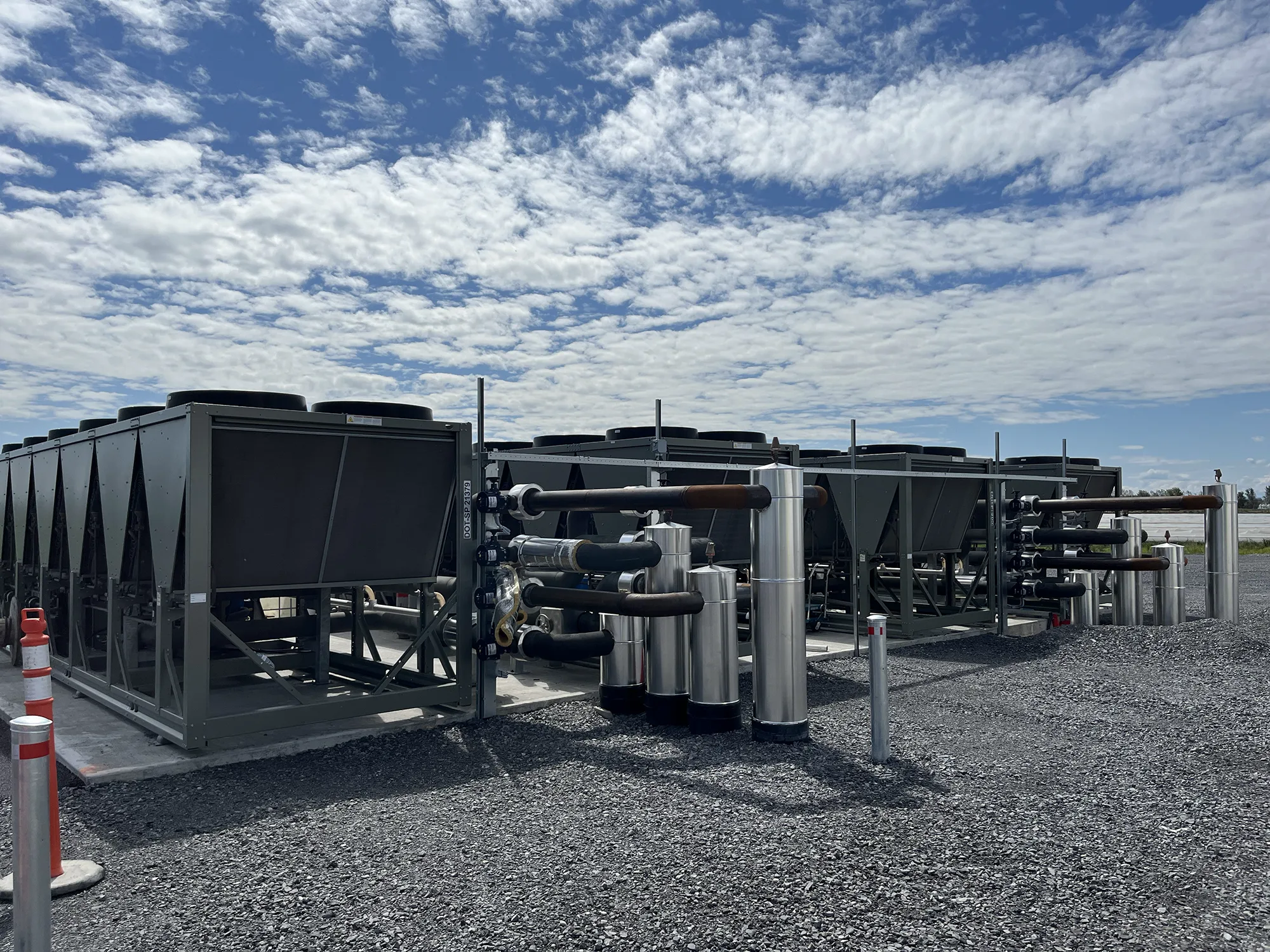
Vegpro’s new “ecofriendly greenhouse,” commissioned in April 2025 in Sherrington, Quebec, uses state-of-the-art greenhouse technology, including an automated growing system, residual heat recovery, heat pumps and computerized climate control. Thanks to these innovations, the company should be able to produce 68 tonnes (150,000 lb.) of lettuce per week under controlled conditions, without pesticides or GMOs.
In addition, they will enable the company to save considerably on natural gas and significantly reduce its GHG emissions,8 as shown in the table below.
| Measures implemented | Natural gas savings (m3) | GHG reduction9 (tonnes) |
| Permanent insulation around greenhouse perimeter | 230,708 | 443 |
| Thermal screens | 1,138,644 | 2,188 |
| Greenhouse climate control | 235,648 | 453 |
| Energy savings through heat recovery from chimney flue gases with thermal storage and cogeneration heat exchanger recovery | 676,294 | 1,300 |
| Low-temperature heat pump and thermal reserve | 718,976 | 1,382 |
| Savings in greenhouses not built due to the use of an automated growing system | 1,868,649 | 3,592 |
| Total | 4,868,919 | 9,358 |
As part of this project, Vegpro will receive a grant from Énergir totalling $2,225,000.
Grants that make your job easier
To make it easier to implement energy efficiency measures and accelerate their return on investment, Énergir offers a number of financial incentives for greenhouse farming under its energy efficiency grants program. For program conditions and eligibility criteria, click the links below:
- Up to $4,500 for the purchase of a condensing unit heater
- Up to $50,000 for a feasibility study on implementing energy efficiency measures
- Up to $1,000,000 for the implementation of energy efficiency measures ($1 per m3 of gas saved)
We are here to advise and support you
Do you currently or are you planning to operate a greenhouse and want to learn more about energy efficiency measures that could reduce your energy bill and improve crop productivity? Contact our experts at DATECH, a team dedicated to the success of your projects.
Cimon Desforges, P. eng.
Senior Advisor, Energy Expertise
Pierre-Olivier Nadeau, P. eng.
Senior Advisor, Energy Expertise
Notes
1 Kierkels T., 2013.
2 Ground tubes in rail systems or vegetation tubes.
3 Gelder et al. 2017.
4https://themarketgardener.com/farming-techniques/automatization-to-increase-your-greenhouse-yields/
5https://www.munters.com/en-ca/industries/food-and-agriculture/greenhouse/greenhouse-climate-control/
6 Source: Energy efficiency study by Énergir and Génika, 2024, p. 39.
7 Khosla, S. (2002) Carbon Dioxide in Greenhouses. Accessed at http://www.omafra.gov.on.ca/english/crops/facts/00-078.htm
8 Compared to a baseline scenario without these systems and measures.
9 For more information on the methodology used to calculate greenhouse gas (GHG) emissions reduction data, see our Methodologies page.
Further reading
Heat exchangers: Efficiency in the air for Quebec livestock producers
Ever heard of heat exchangers or heat recovery ventilators (HRVs) for livestock buildin...

Water treatment: a prerequisite for energy efficiency of heating equipment
What’s the relation between my water treatment supplier and my natural gas bill? It’s s...
Bridgestone’s Joliette Plant Sets an Example for Decarbonization
Bridgestone, a global tire manufacturing giant, has set itself the goal of becoming an ...
Maslow’s pyramid applied to energy efficiency in buildings
Every time you take on an energy efficiency project, your challenge is to find the best...