
With air curtains, energy efficiency starts at the doorstep


Among all greenhouse gas (GHG) emission reduction strategies, energy efficiency measures are the logical first step in a structured decarbonization process. There are many ways to optimize the energy performance of buildings – including air curtains. This simple and accessible technology allows for significant energy savings and quick return on investments under the right conditions.
What is an air curtain?
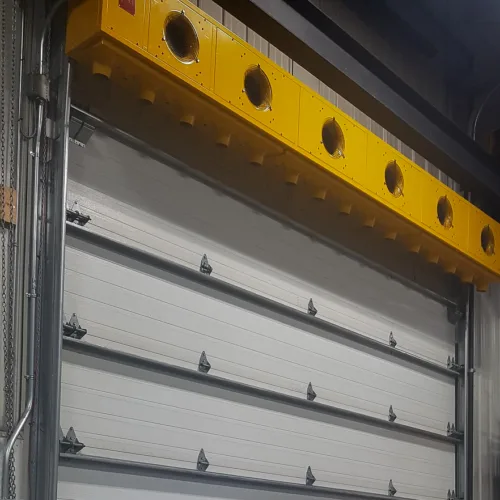
As its name suggests, an air curtain is a device that creates an invisible air barrier at the entrance to a given building or area to reduce heat exchange when doors are open and heating or cooling units are insufficient to maintain the desired temperature. Triggered automatically by the opening of doors, a high-speed blast of pulsed air stops the infiltration of cold air during winter and hot air during summer. It is also very effective in preventing the entry of insects, dust and vehicle fumes into buildings.
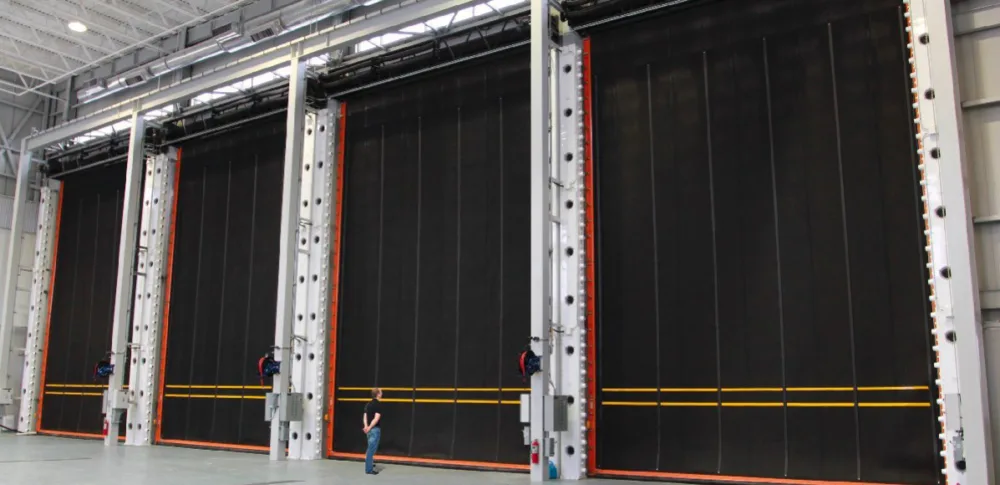
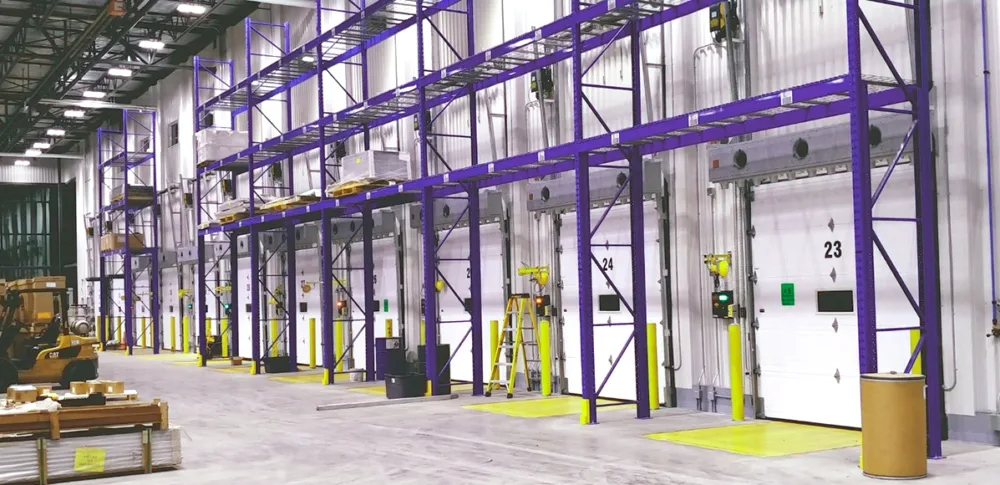
Here are some options for installation. Air curtains can be mounted vertically on either side of the entrance when a door is too high for the airflow to reach the floor.
How does it work?
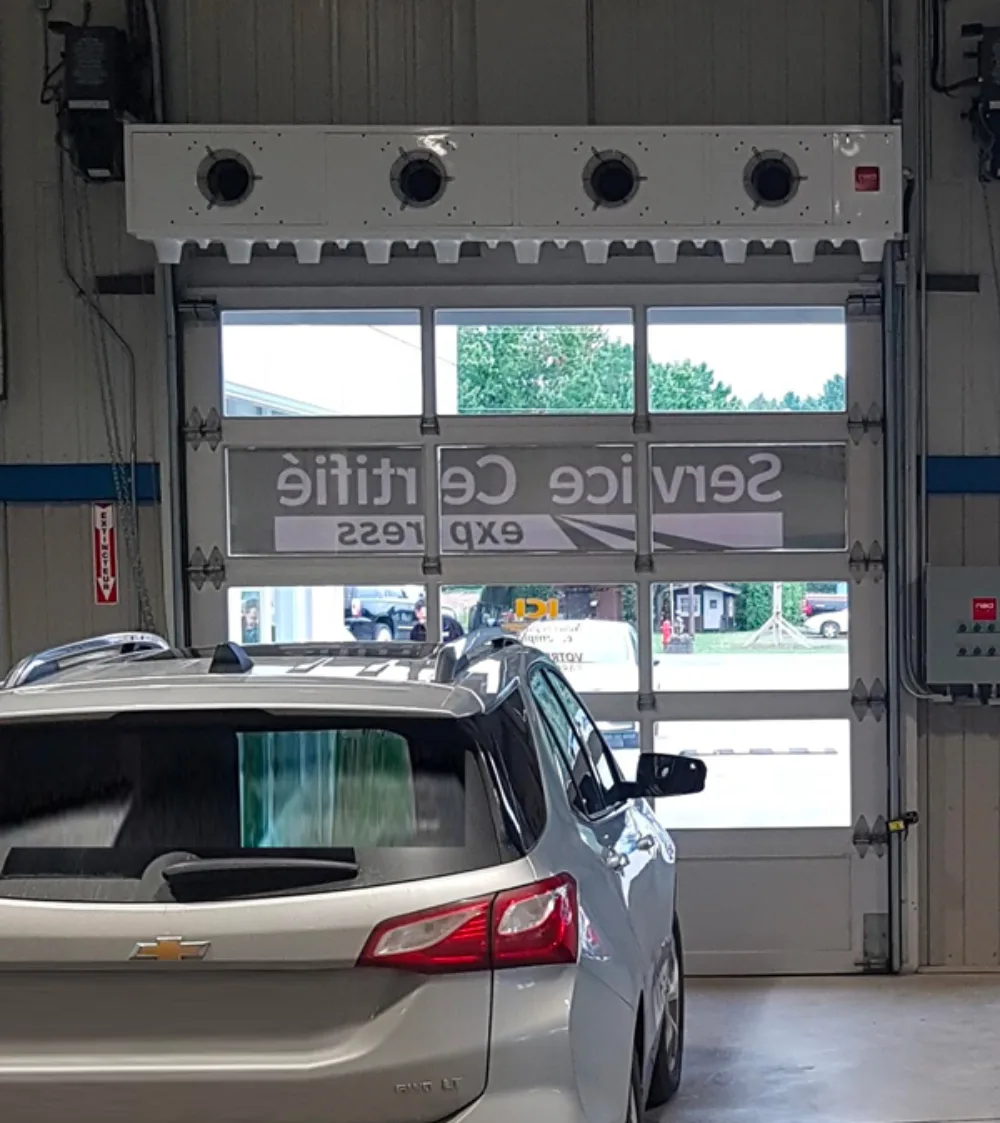
The mechanical device itself (the ventilation unit) is available in many versions and formats that can accommodate a variety of entryways and usage scenarios, from the drive-through service windows to the entrance to an aircraft hangar, to the doors of office buildings or warehouses. The air stream can be oriented vertically (from top to bottom or from bottom to top) or horizontally, as required.
Efficiency in the air
Studies show that a suitable air curtain, properly installed and used, can provide energy savings of 50% to 85%, which can add up to thousands of dollars every year.
“Of course, you need to assess your needs and how long doors are open for before you invest in an air curtain. A business or a factory whose doors are open for a few minutes a day will barely benefit from an air curtain, however, if the doors are open for one or two hours a day in total, an air curtain can be profitable very quickly.”
Energy saving ﹣ Return on investment
| 1. Data | |
|---|---|
| Province | Quebec |
| Region | Estrie |
| Outdoor winter temperature | -15 °C (5 °F) |
| Indoor winter temperature | 22 °C (72 °F) |
| 2. Building characteristics | |
|---|---|
| Door width | 3.7 m (12 pi) |
| Door height | 4.3 m (14 pi) |
| Annual natural gas consumption | 20,000 m³ |
| Cost of natural gas | $0.44/m³ |
| 3. Air curtain features | |
|---|---|
| Number of fans | 4 |
| Voltage | 575 VAC |
| Total pulsed air output | 5,200 cfm |
| Cost of air curtain | $10,000 |
| Hours of operation per day | 1 hour |
| Days per week | 5 days |
| Weeks per year | 28 weeks |
| Total hours of operation/year | 225 h/year |
| 4. Results | |
|---|---|
| Consumption without air curtain | 20,000 m³ |
| Consumption with air curtain* | 9,693 m³ |
| Annual amount saved | 10,307 m³ |
| 5. Annual savings | |
|---|---|
| Annual savings | $4,535 |
| Return on investment (ROI) period | 2.2 years |
| Énergir grant | $3,092 |
| Grant/cost of air curtain | 30% |
For the savings … and the rest
The economic argument of the air curtain, that being reducing building operating costs, is not the only benefit of this technology. It also improves:
- the comfort of workers and customers;
- indoor air quality (barrier against pollutants, allergens, fumes, odours, etc.);
- food safety;
- foot traffic safety (no visual obstacles);
- It can also be integrated into a pest management plan (rodents, insects).
Finally, by reducing energy consumption (heating and/or cooling), the air curtain ensures better building energy performance and thus a reduction in its carbon footprint.
Shortening the ROI through Énergir’s grant
As such, Énergir offers a grant for the installation of air curtains as a part of the Studies and Implementation of its energy efficiency program. This grant is conditional on the company using natural gas or renewable natural gas as a source of heating; it allows the company to receive up to $1 per m³ of gas saved for a maximum of $100,000.
“This is a good way to further reduce the return on investment period,” Acher emphasizes.
A simpler and faster process
In addition, to simplify the calculations prior to grant applications, Énergir’s Natural Gas Technology Centre (NGTC) has developed a free air curtain calculator. The calculator is provided to interested clients to estimate the savings associated with equipment installation.
“It’s a useful tool to find out if an air curtain is suitable for their needs and to provide some of the data required for the grant application,” says Feriel Acher.
Technology adapted to our climate
Whether for commercial, institutional or industrial applications, air curtains are an easily deployable energy efficiency measure that can be easily and inexpensively integrated into a global decarbonization strategy. It also contributes directly to the comfort of the building’s occupants and ambient air quality. Finally, air curtains lend themselves particularly well to the Quebec climate – where the difference in indoor and outdoor temperatures is often considerable – by avoiding major heat and cold losses.
Cimon Desforges
Senior Energy Advisor
DATECH Group
Notes
* Results based on the calculator developed by Énergir.
Further reading
Heat exchangers: Efficiency in the air for Quebec livestock producers
Ever heard of heat exchangers or heat recovery ventilators (HRVs) for livestock buildin...

Industry 4.0 Applied to Energy Efficiency
Have you heard about Plant 4.0 or Industry 4.0?It refers to the fourth industrial revol...
How can you cut energy consumption in half with an efficient painting line?
To improve operational efficiency and product quality, a manufacture made a significant...

The Steam box: A (Re)Discovered Technology to Optimize Paper Production
Paper manufacturing is an energy-intensive process, especially at the drying stage. But...