
Recovering lost energy to save money and decarbonize: A winning solution for the Produits Kruger plant in Sherbrooke



Produits Kruger, Canada’s largest manufacturer of consumer paper products, invested more than $10 million in a major energy recovery project at its Sherbrooke plant in the Eastern Townships. Completed in two phases between 2022 and 2026, this initiative resulted in a significant reduction in natural gas consumption, greenhouse gas (GHG) emissions and energy costs at the plant. In this article, we present this approach in detail, along with figures demonstrating the results.
Drying, a source of energy to be harnessed
Opened in February 2021, Produits Kruger’s TAD plant in Sherbrooke is home to the largest and most advanced through air dryer (TAD) in Canada. This machine uses two series dryers that propel hot air through the paper to produce about 70,000 metric tonnes of toilet paper and paper towels annually. TAD technology achieves from 30% to 50% higher volume than traditional drying methods and exceptionally soft products, while also generating large amounts of heat.
Capturing and reusing fatal heat
With the goal of reusing some of this heat, Produits Kruger developed a plan to recover some of the energy evacuated from the machine to preheat the supplemental air (fresh air) used to balance the atmospheric pressure inside the building and ensure the comfort of its occupants. The supplemental air was originally delivered into the building through ten fresh air units used in heating mode during the winter and also during cool summer evenings, resulting in significant natural gas consumption (4,500,0003/year).
A plan with strong economic and environmental potential
At the same time, Produits Kruger contracted Gaama, a Québec company that specializes in the integration of industrial processes, to quantify the savings that could be generated by the plan. The results of the Gaama study confirmed the viability of the initiative by demonstrating “the positive impact of the energy recovery system on GHG reduction, energy consumption and costs” (see figures at the end of the article).
The solution: a glycol tower with a condenser plate exchanger
Based on the existing energy consumption parameters and the plant’s supplemental air requirements, the Produits Kruger project team identified a solution, the main features of which are presented below:
- Using energy from the TAD exhaust to preheat the supplemental air delivered by the fresh air units. This dryer has a large capacity burner, so the recovered energy is enough to power the heating.
- Installation of a custom glycol tower with a condenser plate exchanger (indirect contact) in the TAD exhaust duct. The glycol is heated only by recovered energy and then distributed to the fresh air units. The thermal fluid is a mixture of propylene glycol and water.
Two-phase project
Given the scope of the project, the energy recovery system was implemented in two phases. Phase 1, completed in September 2025, distributed energy to the first five fresh air units, for a total of 382,000 CFM. Phase 2, completed in December 2026, connected the five remaining fresh air units for a volume of 334,000 CFM. The grand total is 716,000 CFM and the energy availability is about 90%, which covers the vast majority of the building’s heating needs.
Welcome financial support
The division of the project into two phases also allowed Produits Kruger to submit two separate grant applications to Énergir under the Implementation of energy efficiency measures component of the energy efficiency grant program, obtaining the maximum eligible amount each time. In total, Produits Kruger received $2 million in financial assistance from Énergir, in addition to financial support from the Government of Québec under the EcoPerformance Program.
Valuable collaboration
Grant optimization is part of the support that the DATECH team provides to its clients to help them accelerate the profitability of their projects. “We have worked with Produits Kruger for a long time, and its managers have developed the reflex of contacting us when the company is planning energy efficiency projects to find out what subsidies can be granted and under what conditions,” explained Éric Émond, Eng., Senior Advisor, Energy Expertise, with DATECH Group. “This closeness is the result of the fieldwork carried out by the DATECH team and our representatives, whose goal is to support our clients’ decarbonization efforts.”
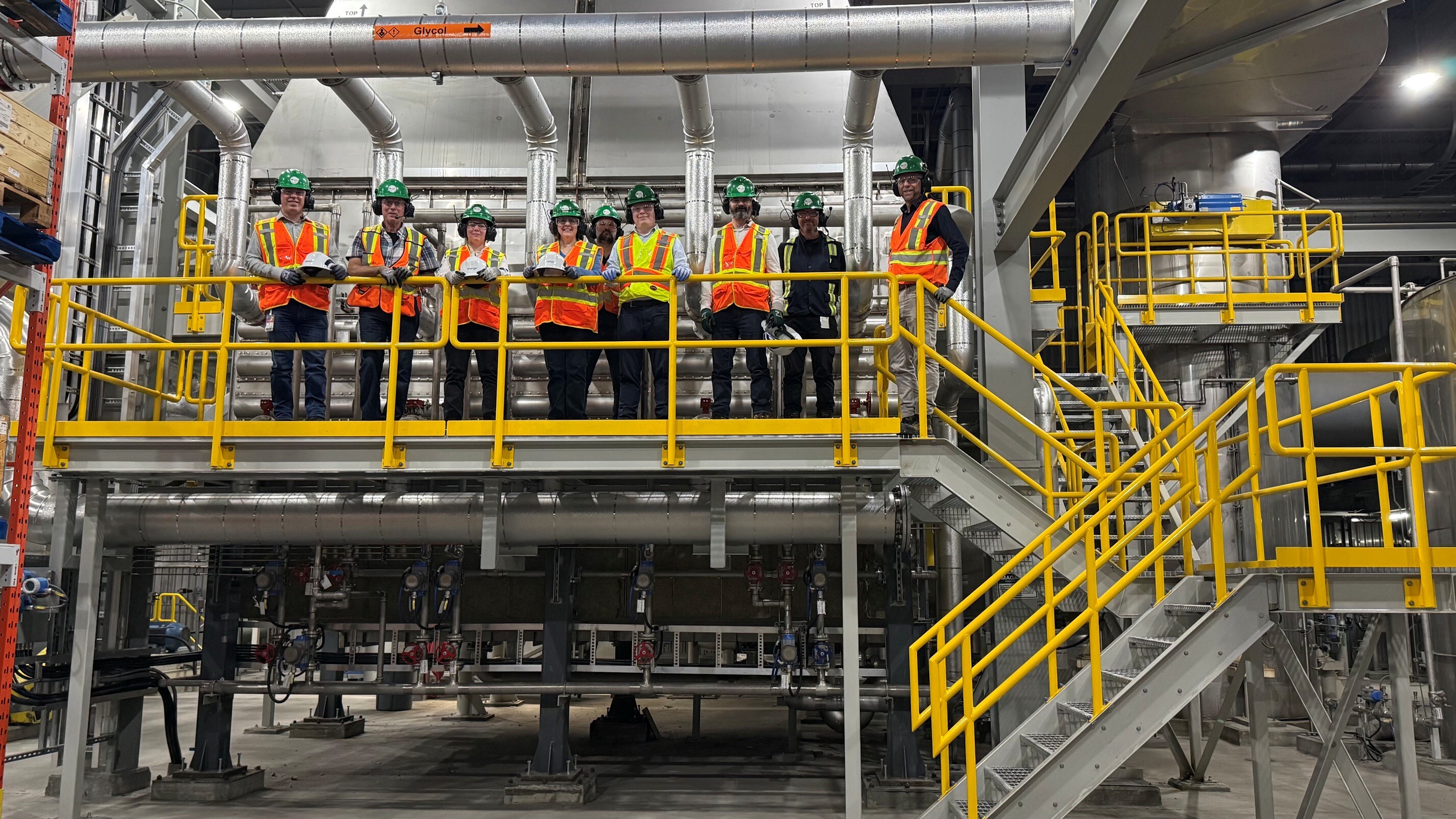
The financial assistance provided by Énergir and the Government of Québec significantly reduced the investment recovery period (IRP) for both phases of the project.
Numbers that speak for themselves
The projected1 results speak even more eloquently about the success of this project.
- RAnnual reduction in GHG emissions: 7,825 tonnes
- Annual reduction in natural gas volume: 4,141,661 m3
- Annual reduction in energy consumption: 156,928 GJ
Énergir and the DATECH team: the right support at the right time
This large-scale project is an example of how a well-designed energy efficiency solution, combined with optimized financial support, can translate into quick and tangible economic and environmental benefits. For more information on what Énergir can do to facilitate the deployment of your decarbonization projects, contact your Énergir representative or the DATECH team.
Legal notice
1. Projections taken from the Gaama study report, commissioned by Produits Kruger : “GHG-free heating and energy recovery at TAD dryer.”
Further reading
Heat exchangers: Efficiency in the air for Quebec livestock producers
Ever heard of heat exchangers or heat recovery ventilators (HRVs) for livestock buildin...

Renewable natural gas, a circular economy model
Renewable natural gas production not only presents a significant economic development p...
Evaluation of techno-economic potential of producing renewable natural gas in Québec
Climate change has already had an impact on our modern lives. Developing energies and t...
Natural gas emergency generators: A reliable and safe alternative
Power outages, natural disasters, fires, business continuity, etc.—the usefulness of em...